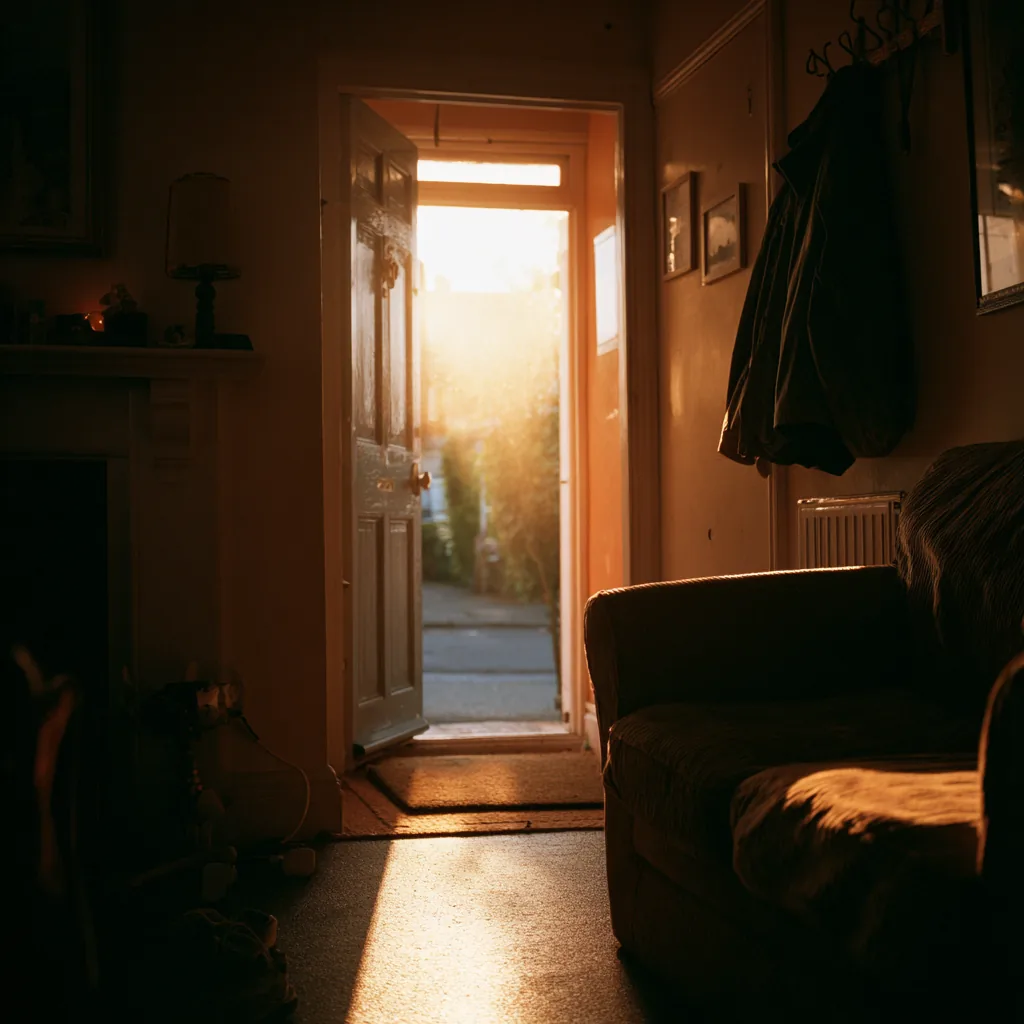
You've already had the argument
You've suggested a clear-out. You chose your words carefully, or maybe you didn't. Either way, it went badly. You drove home afterwards feeling guilty — for pushing too hard, or not hard enough, or for the look on their face when you mentioned the spare room.
Most people who call us about a family member's home have been in exactly that moment. You're not the first person to feel stuck between wanting to help and making things worse.
Why "helping" can backfire
The instinct to turn up with bin bags comes from love. But to the person living there, it can feel like something else entirely.
Here's something most people don't realise: belongings often represent safety. That stack of newspapers by the door isn't clutter to the person who put it there — it's familiar, it's theirs, and it's been there long enough to feel like part of the home. Removing things without consent doesn't clear a room. It breaks trust.
You don't have to understand why something matters to them. You do have to respect that it does.
The conversation that actually helps
Forget the plan. Forget the grand clear-out. The most useful thing you can do right now is have a conversation that isn't about the house at all.
"I worry about you" lands differently from "This place needs sorting out." One opens a door. The other closes it.
Visit regularly. Stay connected. Let them know you're concerned, not frustrated. If they say an item is important, honour that — even when you can't see why. "Can I help you sort this one drawer?" is easier to say yes to than "Let's clear the house."
Progress might take months. That's normal. What matters is that the person feels supported, not cornered.
When it's more than you can manage alone
There comes a point for many families where love and good intentions aren't enough. Blocked exits, health risks, or a call from the council can tip the balance.
You don't need it to be "bad enough" to ask for help. If you're worried, that's reason enough.
Whether a home needs hoarding clearance, a deep clean, or support after a bereavement — we work at the person's pace. Nothing is removed without their agreement. If they need to stop, we stop. There is always another day.
That's why our team is DBS Enhanced checked and safeguarding trained. We're trusted by four councils, and we've supported over 205 families in the past year. Every job includes full documentation — waste transfer notes, completion reports, and summaries for the referring officer.
If they refuse help entirely, that is their right — unless there is a safety concern. Our guide on when hoarding becomes a safeguarding concern can help you understand where that line falls.
Look after the person doing the looking after
This takes a toll that nobody warns you about. The shame of not noticing sooner. The guilt after every visit. The loneliness of carrying it without telling anyone.
Those feelings don't make you a bad person. They make you someone under real strain.
Talk to your GP. Contact Hoarding UK, a charity that supports both individuals and families. You can't look after someone else if you're running on empty.
And if you're the person living with hoarding and you've found this page — reading about it takes courage. We see you too.
The next conversation might go differently
You've already had the argument. You've already driven home feeling guilty. But now you know a bit more about what helps and what doesn't. That changes things.
If you're not sure what to do next, that's OK. Call us on 01933 213045 any time, day or night. We'll listen. No pressure, no judgment, and everything is completely confidential.
When you're ready, read what to expect when you book a hoarding clearance. Or visit our hoarding clearance page for more about how we help.