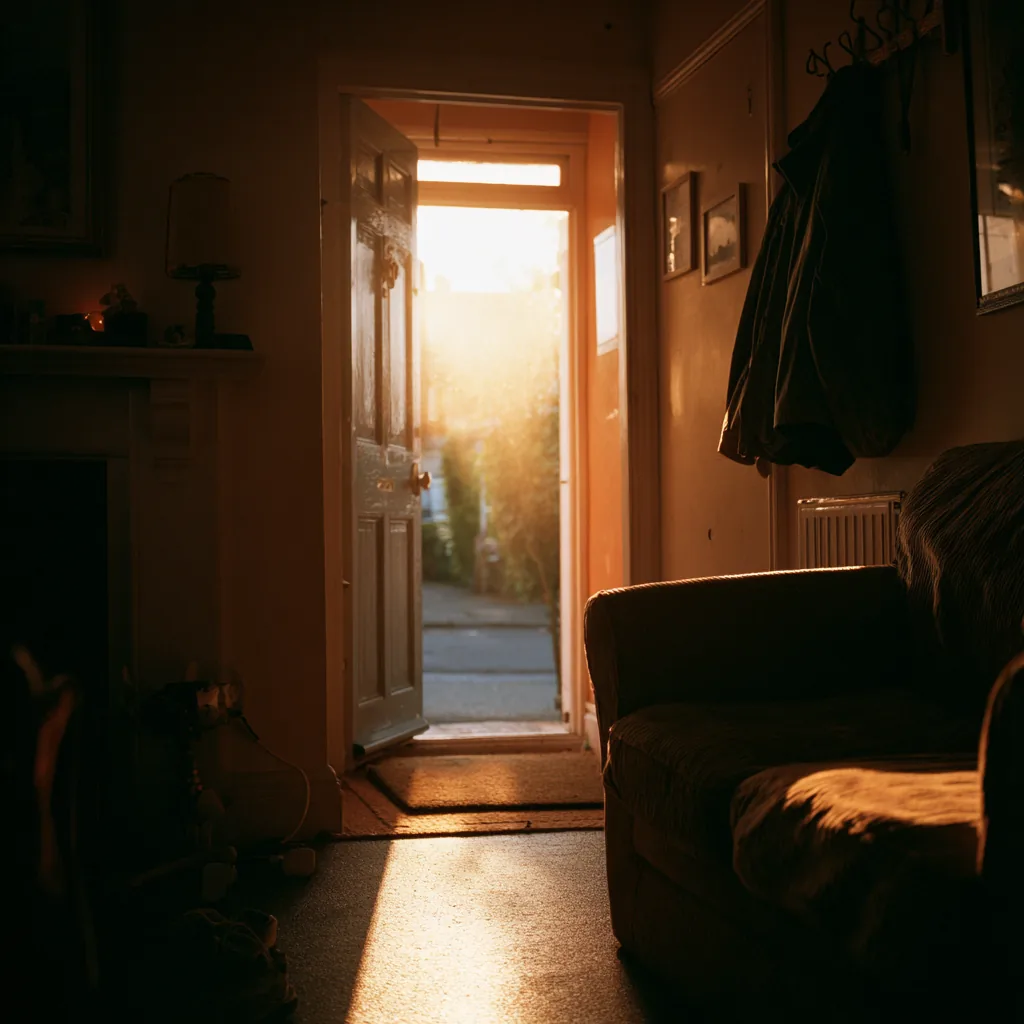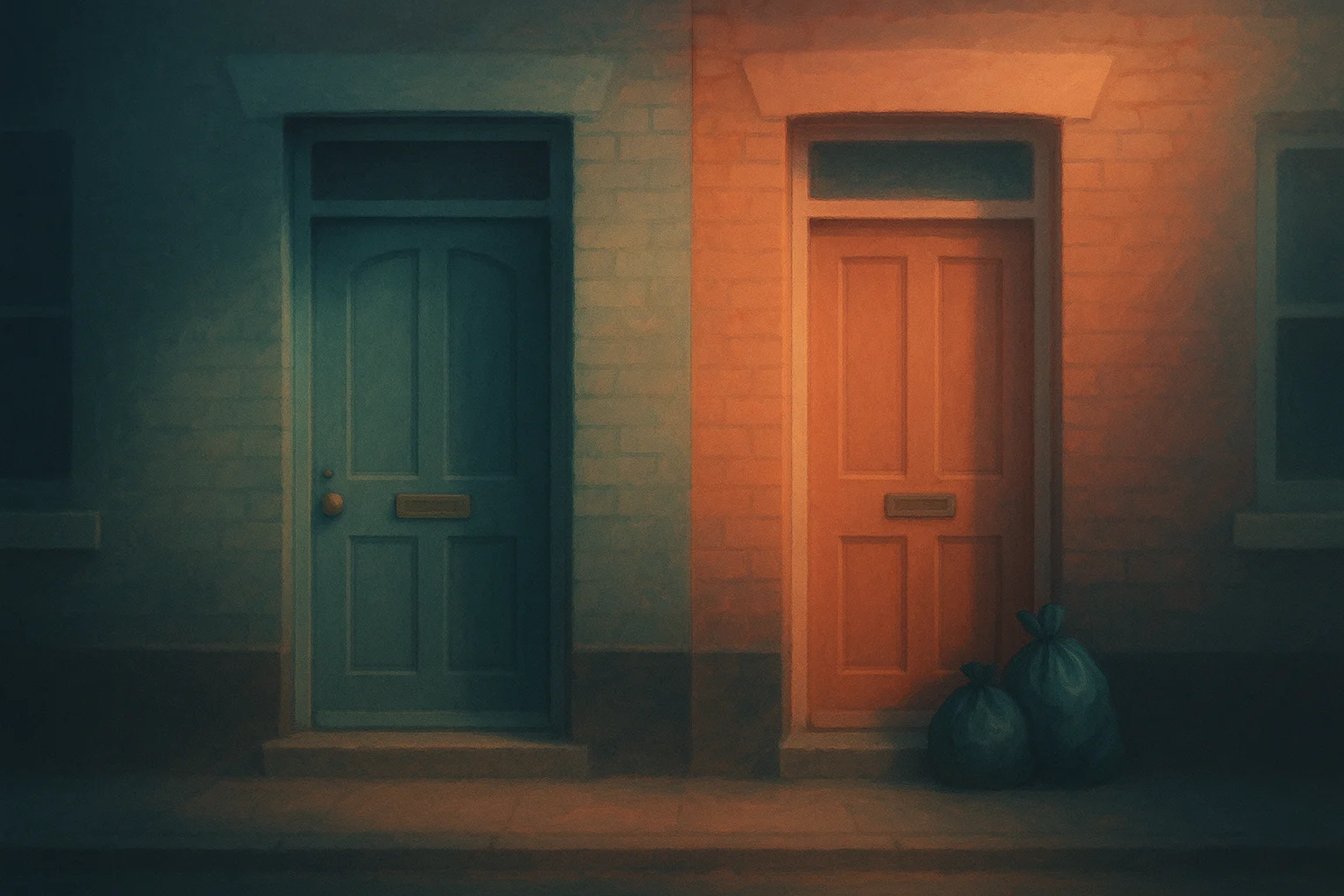
Two referrals can read almost word for word the same. "Property in very poor condition. Strong odour. Resident reluctant to engage. Access difficult." One of them is hoarding. One is self-neglect. The form rarely tells you which.
The question underneath — the one no field on the form quite asks — decides everything that follows. Is this home full because of what's being kept? Or because of what's stopped being done?
The same sentence on two forms
From the doorstep, the two can look identical. The same narrow gap when the door opens. The same window you can't see through. The same neighbour who has rung twice.
Underneath, they're different conditions with different causes.
Hoarding sits with attachment and acquisition. Things come in and don't leave, because each one carries a meaning the rest of us can't see. The person is often managing their belongings constantly — in an order only they can read.
Self-neglect is the opposite shape. Often nothing new is coming in at all. Washing, cooking, carrying things out — the ordinary maintenance of a life has stopped. Usually because health, mobility or a hard stretch of life has taken it away. The pattern clinicians recognise behind it is rarely about possessions.
What the bin bags already know
One of the first things worth noticing is the bin bags. In a home affected by self-neglect, there are often tied bags by the back door. Full, knotted, ready to go out. Someone knew they should leave and couldn't manage the last twenty feet.
In a hoarded home, you almost never see that. Nothing is bagged, because nothing is leaving. What you find instead is a single walking line through the rooms — one person wide, turning where the stacks turn, kept open with real care. The path is the tell: someone is still tending this home, just not in a way the form has a box for.
That one detail carries the whole distinction. One home is holding on. The other has stopped.
Why it changes the consent picture
Most officers carrying one of these cases hold two imagined files in their head at once: the one where they pushed too hard, and the one where they waited too long. The cases that stay with you past five o'clock are the ones where both feel possible.
Knowing which home you're standing in changes what a yes — and a no — actually mean.
In a hoarded home, every object is a decision that belongs to the resident. Clearing without genuine consent doesn't resolve anything — the home refills, and trust never recovers. The work has to move at the pace of the person whose things they are.
In self-neglect, the person is often not attached to the accumulation at all. The reluctance at the door is usually about shame, or about strangers — not about losing things. Once trust is there, the clean itself can move quickly. But the cause behind it won't have gone anywhere. Without the GP, mental health or care support carrying on after the visit, the home goes back.
Either way, a no is an answer. A home being unsafe doesn't cancel a person's right to decide who comes in. Whether they have capacity to make that decision is your call and your safeguarding leads' — never ours. We've left and come back weeks later, when the resident was ready.
If you're here because you're still weighing whether the situation needs raising at all, rather than which kind of job it is, our guide on when hoarding becomes a safeguarding concern is closer to what you need.
Two different cleans
A hoarded home is sorting work. Decision-heavy, usually spread over several visits, the resident leading. Most hoarding and decluttering projects take two to six visits; rushing that is how clearances fail.
A home affected by self-neglect usually needs a deep clean — far fewer decisions, often completed in a single visit. The focus is making the kitchen, the bathroom and the bed usable again first, so care or reablement support has somewhere to work.
Whichever clean it is, the team arrives in a plain van, and if a resident mentions something mid-clean that needs reporting, they know who to tell and how to record it — that's what their safeguarding training is for. DBS Enhanced checks come as standard. And the referring officer gets the completion record and waste documentation in writing — not a phone call to chase.
We don't treat the cause, and we don't do repairs or pest control. What we leave behind is a home the resident — and whichever team comes next — can start again from. We'll always say plainly where our work ends and someone else's begins.
You don't have to be sure before you refer
The distinction matters, but you don't need it settled before you act. If there's a form on your desk and you're not sure which job it is, ring us before you choose the route.
Describe the doorway. The bags, the path, what the neighbour said. Within a few minutes you'll usually know what you're sending people into — and what to ask for alongside the clean.
The next time two referrals read word for word the same, look for the difference at the door. One home is holding on to things. The other has stopped doing them. They aren't the same job — and they were never the same conversation.
Call us on 01933 213045 — describe what's on the form, and we'll help you work out which job you're looking at.