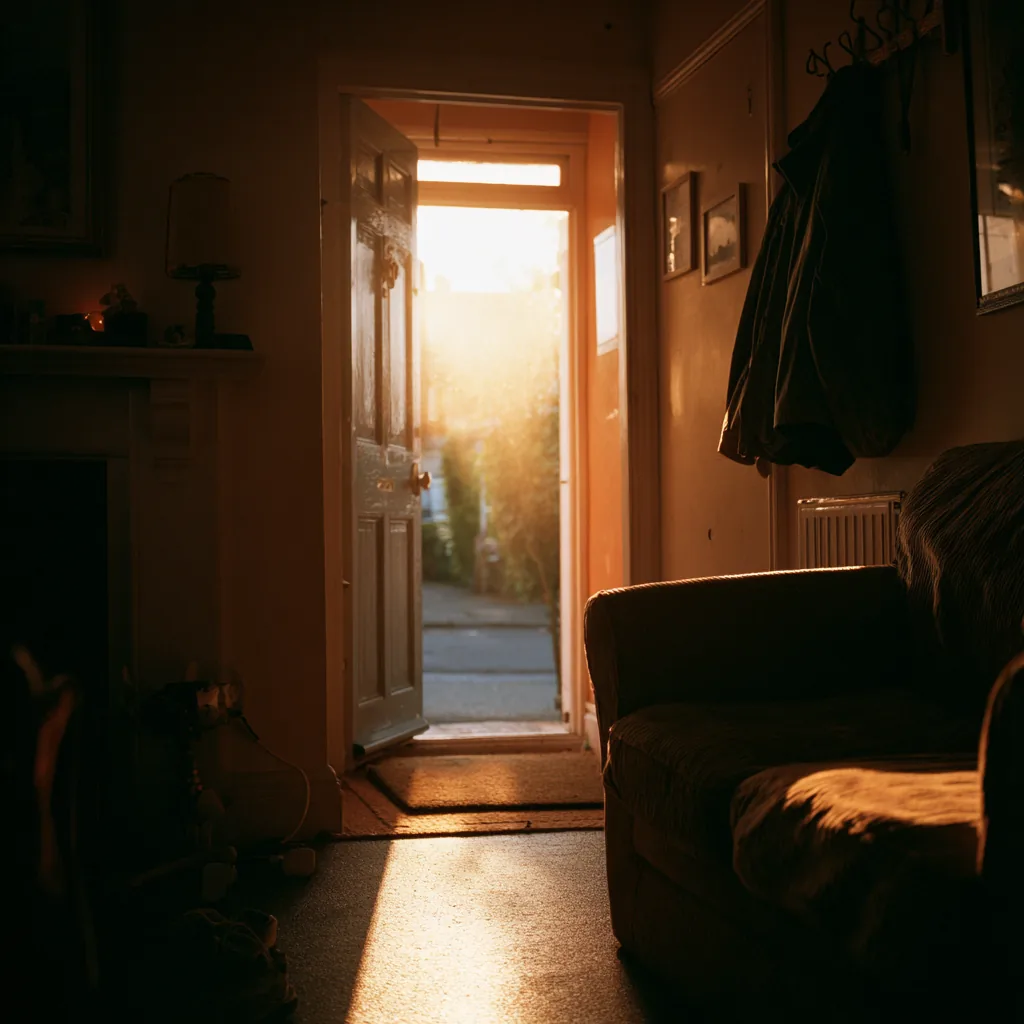
Nobody calls themselves a hoarder.
In all the phone calls and referrals and first visits that happen across the country every day, almost nobody living with hoarding disorder uses that word about themselves. What they say is closer to: "Things have got on top of me." Or: "I know it looks bad." Or sometimes nothing at all — because the word they've heard other people use felt like a door closing, not one opening.
Language might sound like a small thing when there's a property that needs clearing. But the words people hear about their situation shape whether they ever ask for help.
The word that stops people calling
"Hoarder" turns a person into a label. It compresses someone's entire life — their grief, their illness, their circumstances — into a single word that sounds like a verdict.
The NHS doesn't see it that way. Hoarding disorder has been formally recognised as a distinct condition in the ICD-11 classification since 2022. It's not a lifestyle choice. It's not laziness. It often sits alongside depression, anxiety, bereavement, or trauma. The clinical language exists because the condition is real, and it deserves the same care as any other.
But outside clinical settings, the old language persists. Television programmes that treat it as spectacle. Neighbours talking about "the state of that house." Family members using the word in frustration because they don't have a better one.
You can love someone and still use the wrong words
That frustration is real. Watching someone you love live in a home that's becoming unsafe is exhausting. You want to help. You want to fix it. And sometimes the word comes out not because you mean harm, but because you've run out of patience and vocabulary at the same time.
You love them and you're frustrated with them. You want to protect them and you feel helpless. Those aren't contradictions — they're what caring looks like when things have gone on longer than anyone expected.
But the person hearing that word doesn't hear the love behind it. They hear a judgment. And when someone feels judged, they don't reach out. They close the door a little tighter.
What the words actually do
People apologise for the language before they apologise for the house. "I know it's hoarding," they'll say on the phone, already flinching — as if naming it that way is part of agreeing to be judged for it.
A home affected by hoarding is not the same thing as a person who is a hoarder. One describes a situation. The other defines an identity. That gap changes everything.
It's not about being polite — it's about being effective
This isn't about tiptoeing around feelings. It's practical.
Council professionals writing case notes, housing officers filing referrals, social workers preparing for multi-agency meetings — the language in those documents shapes how everyone who reads them responds. "Hoarding disorder" signals a health condition requiring a considered approach. "Hoarder" signals a difficult tenant.
One shift makes a difference: describe the situation, not the person. "A property affected by hoarding" rather than "a hoarder's house." "Someone experiencing hoarding disorder" rather than "a known hoarder." It costs nothing. It changes the tone of every interaction that follows.
What changes when the language changes
The moment that matters most in hoarding support isn't the cleaning. It's the first conversation. In our experience, when someone hears "tell me about your home" instead of "how did it get this bad," something shifts. Often it's the first time anyone has spoken to them about the situation without judgment.
That conversation is about whether the person feels safe enough to let someone help. Language is the thing that makes or breaks it.
Our team works alongside councils across Northamptonshire, Milton Keynes, Norfolk, and Norwich. Every member is DBS Enhanced checked and safeguarding trained, and arrives in unmarked vehicles — because discretion runs deeper than how you knock on a door. It includes the words you use when it opens.
The first word matters most
You might be a daughter trying to find a kinder way to talk to your mum about her home. You might be a housing officer looking for language that fits a case note without reducing someone to a label. You might be someone living with this yourself, reading this late at night because you searched for something you weren't sure how to phrase.
Wherever you are, the next conversation doesn't have to start with a word that shuts things down.
You've been thinking about this for a while. You don't need the perfect words before you call.
Ring us on 01933 213045 — whenever you're ready. The conversation is free, and if we can't help, we'll tell you who can.
Nobody has to be called anything. They need someone who'll listen.